

Businesses do not always reach customers through traditional retail or direct-to-consumer channels. Depending on the product, market, and business model, alternative distribution channels can open access to different audiences and create new opportunities for reaching customers.
These channels can include online marketplaces, off-price retailers, closeout stores, wholesalers, trade networks, and other secondary-market outlets. Each operates differently, with its own requirements, customer base, and approach to merchandise.
This guide looks at several alternative distribution channels and explains how businesses can evaluate them, identify relevant companies, and make their outreach more effective.
Online Marketplaces
What is an Online Marketplace?
An online marketplace is a platform where multiple third-party sellers can list and sell products directly to consumers. Well-known examples include eBay, Amazon, and Alibaba. These platforms give businesses access to a large audience and provide tools for managing listings, transactions, shipping, and customer service. Sellers can list individual items or larger quantities depending on the platform and product.
Online marketplaces also offer features like auctions or fixed-price listings, allowing businesses to choose how they want to sell their extra stock.
When to Use Online Marketplaces
Online marketplaces are particularly effective when a business has small quantities of various items rather than large amounts of a single product. For businesses considering how to sell your excess stock, online marketplaces can provide a way to list individual products without having to identify a single bulk buyer. For instance, if a retailer is dealing with surplus inventory from various product lines, such as electronics, apparel, or home goods, each with limited quantities, platforms like eBay or Amazon allow them to list each item individually.
This flexibility makes online marketplaces an ideal solution for moving mixed and diverse inventory. Sellers can target specific buyers who are searching for unique or discounted products rather than needing to find bulk buyers.
Benefits of Using Online Marketplaces
Online marketplaces can provide broad consumer reach and flexible listing options, particularly for smaller or mixed product assortments. First, these platforms have a massive global audience, increasing the chances of quickly selling off unwanted stock. Additionally, marketplaces like Amazon or eBay provide built-in infrastructure, reducing the need for businesses to manage the sales process themselves.
Sellers benefit from secure payment processing, shipping tools, and customer support features that streamline the transaction. Another key advantage is flexibility, sellers can adjust prices, set auctions, or offer promotions to increase sales, maximizing the return on overstock inventory without committing to a single bulk buyer.
Discount or Off-Price Retailers
What are Discount or Off-Price Retailers?
Discount or off-price retailers, such as TJMaxx, HomeGoods, and Marshalls, specialize in moving branded products at a lower price than traditional retail stores. These retailers purchase unsold, overstocks, or out-of-season items from brands and sell them to consumers at significant discounts. They operate by acquiring products in bulk and distributing them across multiple locations, allowing brands to offload large quantities of inventory.
These stores are known for offering customers name-brand products at a fraction of the original cost, and they thrive on constantly rotating inventory to create a treasure-hunt shopping experience.
When Discount Retailers May Be Relevant
Discount retailers may be relevant for branded merchandise that fits their customer base, pricing structure, and store model. Their multi-location networks can provide access to consumers who actively shop for recognizable products at reduced prices.
Because these retailers have multiple locations and a consistent need for new inventory, they are well-suited for absorbing larger volumes of stock. However, working with discount retailers often comes with specific requirements. Brands must meet logistical expectations, such as handling returns and agreeing to extended payment terms. These factors can impact cash flow and inventory management, so businesses need to weigh the benefits against the operational complexities when selling to off-price retailers.
Benefits of Working with Discount Retailers
Working with discount or off-price retailers can help brands move large quantities of surplus inventory quickly. This can free up warehouse space and reduce storage costs. Since these retailers typically buy in volume, they can help brands clear products that might otherwise sit in storage or lose value over time.
Off-price retailers also give brands access to price-conscious shoppers who may not purchase the same products at full retail prices but are willing to buy them at a discount. This gives companies a way to recover some value from excess stock while getting their products in front of new customers.
Closeout Retailers

What are Closeout Retailers?
Closeout retailers, such as Ollie’s, Big Lots, and Job Lot, specialize in purchasing and reselling inventory that’s been discontinued, overstocked, or marked for liquidation. These stores buy products at deeply discounted prices from manufacturers or retailers and then pass the savings on to their customers.
Unlike traditional retailers, closeout stores typically sell a wide variety of products, from household goods to electronics, at steep discounts. Their customer base is driven by bargain hunters looking for value rather than brand prestige, making these stores ideal outlets for moving large amounts of unsold inventory without needing strong brand recognition.
When to Work with Closeout Retailers
Closeout retailers typically operate around value-oriented merchandise and frequently rotate their assortments. This makes them relevant for products that fit a discount-oriented customer base and flexible merchandise mix.
Customers shopping at places like Ollie’s or Big Lots are looking for great deals rather than luxury products, making it a great fit for moving products that might not appeal to traditional retail outlets.
However, brands should be aware that closeout retailers often have strict requirements, including managing returns and agreeing to extended payment terms, which can impact immediate cash flow and logistical operations.
Benefits of Working with Closeout Retailers
Moving extra stock to closeout retailers offers several advantages for brands. First, these retailers can quickly absorb large quantities of stock, help businesses clear warehouse space and avoid further depreciation of their products. Since closeout inventory buyers are less focused on brand reputation, less well-known brands or discontinued products can still recover significant value by selling through this channel.
Additionally, closeout retailers help brands minimize losses on unsold inventory by offering immediate sales opportunities. This method can also reduce the environmental impact of unsold products by keeping them out of landfills and in circulation.
Inventory Liquidators
What are Inventory Liquidators?
Inventory liquidators, Overstock Trader, specialize in buying large volumes of unsold, discontinued, or overstock products directly from manufacturers and retailers. These companies typically purchase inventory at a steep discount and then resell it to various buyers, including small businesses, resellers, or secondary markets.
Liquidators handle everything from consumer electronics to clothing and household goods, offering businesses a fast way to offload unsold stock. Unlike traditional retail outlets, liquidators don’t focus on brand recognition or retail-ready packaging, making them an ideal solution for moving large quantities of unsellable or outdated items.
When to Work with Liquidators
Working with inventory liquidators is a good choice when a business has large quantities of excess stock, often ranging from a few hundred to hundreds of thousands of units. This is particularly helpful for businesses that need to clear out inventory quickly without dealing with the logistics of customer returns. Liquidators typically offer cash up front, making the transaction fast and simple.
For brands dealing with liquidation sales, obsolete products, or failed product launches, liquidators provide a reliable option to recover some value without the need to manage returns or extended payment terms. This no-hassle approach makes them a preferred choice for companies looking to liquidate stock with minimal complications.
Benefits of Working with Liquidators
One of the key benefits of working with liquidators is the quick turnaround they offer. Since they provide cash upfront and don’t require brands to meet complicated conditions, liquidators are ideal for businesses that need immediate inventory clearance. For eCommerce brands in particular, liquidators don’t demand retail-ready packaging or UPC labels, making it easier to sell items that don’t meet traditional retail standards.
Additionally, because liquidators purchase inventory in bulk, businesses can offload large quantities quickly and efficiently, helping to free up storage space and improve cash flow. This streamlined process, without the need for returns or lengthy payment terms, makes liquidators an attractive option for brands seeking a fast and straightforward solution for excess stock.
Closeout Wholesalers
What Are Closeout Wholesalers?
Closeout wholesalers acquire large volumes of extra, discontinued, or overstocked goods directly from manufacturers, retailers, or liquidators and sell them in bulk to other businesses. Unlike closeout retailers that cater to individual consumers, closeout inventory wholesalers focus on supplying products to other discount retailers, distributors, and resellers.
These wholesalers specialize in offering goods at significantly reduced prices, which allows businesses to purchase inventory at lower costs and then resell them at a profit. Their inventory can range across various product categories, making them a versatile solution for businesses looking to stock diverse merchandise.
When to Work with Closeout Wholesalers
Closeout wholesalers are a great option for manufacturers and retailers when there’s a need to move large quantities of inventory fast. If your business is dealing with overproduction, discontinued product lines, or needs to liquidate assets, working with a wholesaler offers an efficient way to clear out stock. Closeout wholesalers are particularly valuable for businesses that want to quickly offload inventory without the need to market or distribute products directly to consumers.
Moving in bulk also reduces the need for complex sales operations, making it a practical choice for those looking to streamline the process of clearing surplus goods. Also, many closeout wholesalers will pay cash upfront, which is seldom applicable for large national closeout retailers.
Benefits of Working with Closeout Wholesalers
Working with closeout wholesalers provides several key advantages. First, it enables manufacturers and retailers to quickly move large inventory quantities, freeing up storage space and reducing carrying costs. Since closeout wholesalers are accustomed to handling large transactions, they offer businesses the ability to liquidate stock efficiently without having to deal with the logistics of individual sales.
Additionally, by partnering with a wholesaler, businesses can recover some of their investment in unsold goods while avoiding the expenses associated with direct marketing or consumer-facing channels. This also helps reduce the environmental impact of unsold inventory, keeping products in circulation rather than contributing to waste.
Now that we’ve identified the buyers for various types of unsold inventory, let’s go over how we at Overstock Trader approach outreach. Thorough research and investigation are key. We’ve found certain methods more effective when reaching out to buyers. Here are a few examples:
Company Websites
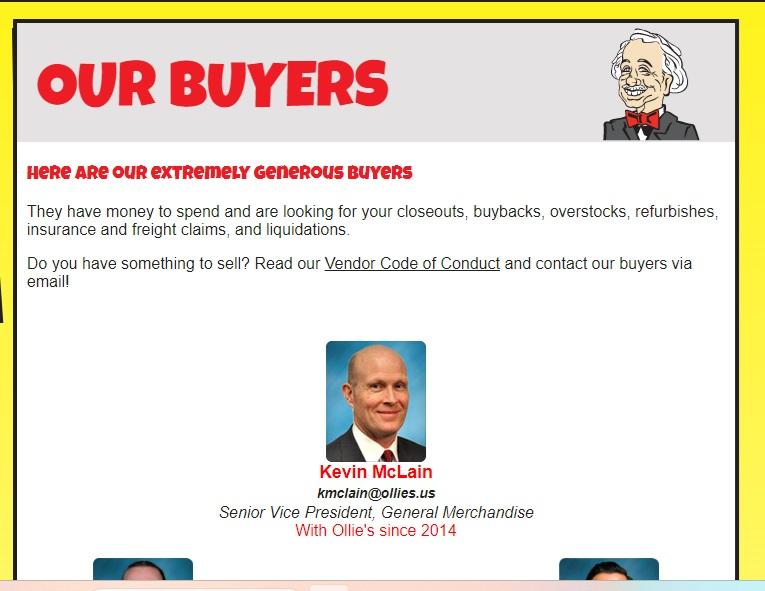
Many companies make it easy to find surplus inventory buyers, often categorized by type. After all, it’s in retailers’ best interest to access quality unsold stock so they can streamline the process. A great example is Ollie’s Discount Retail, where you can find a direct link to their inventory on their homepage.

Then, scroll down to locate the specific buying department you need. Here’s the link for Ollie’s Buyers.
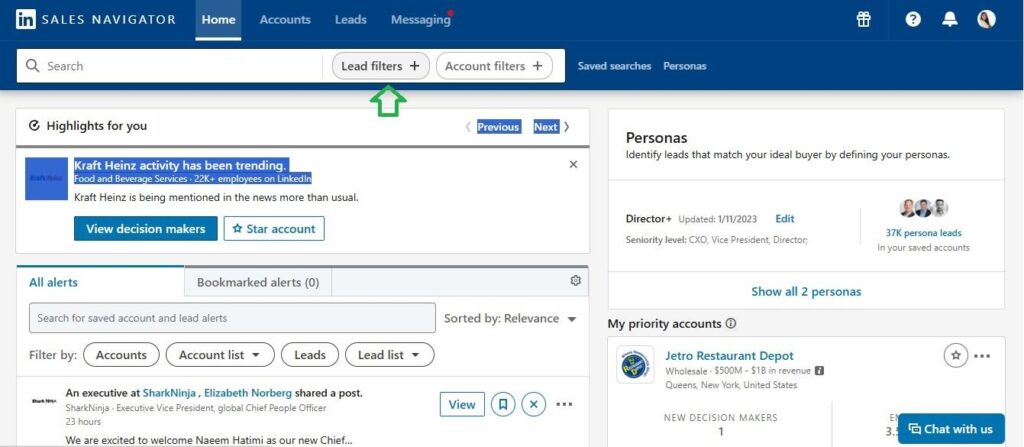
Sales Navigator
LinkedIn Sales Navigator simplifies the process of finding buyers for discount retailers by offering advanced search filters, enabling you to target decision-makers in relevant industries. You can search by job title, company, or industry, making connecting with the right people easier. Additionally, the tool provides insights into company activities and potential leads, helping you tailor your outreach effectively.
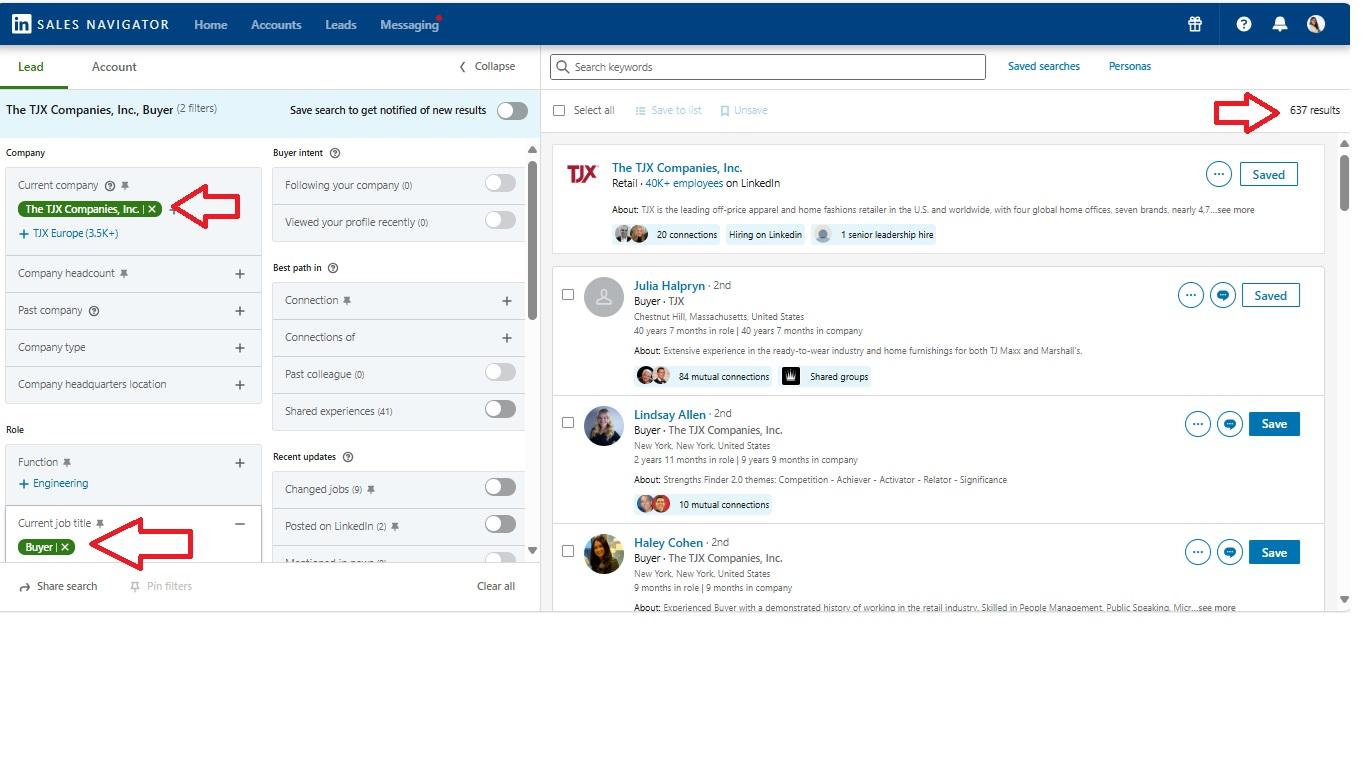
We searched for buyers using filters such as title and company name. My putting in the search criteria, we found over 600 buyers at TJ Maxx.
Consider Working with a Liquidation Partner
Managing outreach internally can take considerable time, particularly when the inventory involves large quantities, multiple product categories, or time-sensitive circumstances. A liquidation partner can evaluate the merchandise, determine which channels may be appropriate, and manage much of the process on the inventory owner’s behalf.
Overstock Trader, for example, purchases inventory directly and may also use established recovery channels when appropriate. For businesses that prefer not to manage individual outreach efforts themselves, this can provide another option for moving inventory through appropriate channels.
Attend Trade Shows
Attending trade shows like ASD Market Week and The Closeout Show offers a prime opportunity to network with excess inventory buyers. These events bring together key players in the discount retail and liquidation industries, making it easy to meet potential buyers face-to-face. You can showcase your products, build relationships, and gain insights into current market demands. Connecting directly with buyers in a focused environment increases your chances of striking deals and expanding your network for future sales opportunities.
Conclusion
The right channel can make a significant difference in how efficiently and profitably inventory moves. Before reaching out, take the time to understand what you have, where it fits in the market, and which types of companies are most likely to have an interest in it.
From there, focus on targeted research and relevant contacts rather than broad outreach. A clear description of the merchandise, realistic expectations, and a straightforward introduction can make conversations more productive.
For businesses that do not want to manage the process themselves, a liquidation company can provide another option. The important thing is to choose an approach that fits the inventory, timeline, and goals of the business.
